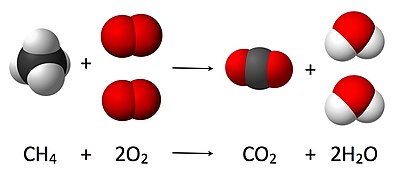
Stoichiometry is founded on the law of conservation of mass
where the total mass of the reactants equals the total mass of the products
leading to the insight that the relations among quantities of reactants and
products typically form a ratio of positive integers. This means that if the
amounts of the separate reactants are known, then the amount of the product can
be calculated. Conversely, if one reactant has a known quantity and the
quantity of product can be empirically determined, then the amount of the other
reactants can also be calculated.
|
1.
|
LAW MASS LAW = LAVOISIER LAW
"The mass of substances before and after the reaction is fixed". Example: Hydrogen + o xygen hydrogen oxide (4g) (32g) (36g) |
||||||||
|
2.
|
PERSONAL COMPARATIVE LAW = PROUST LEGAL
"The ratio of the mass of the elements in each compound is fixed" Example: A. In the compound NH 3: mass N: mass H = 1 Ar. N: 3 Ar. H = 1 (14): 3 (1) = 14: 3 B. In the SO3 compound: mass S: mass 0 = 1 Ar. S: 3 Ar. O = 1 (32): 3 (16) = 32: 48 = 2: 3 Advantages of Proust Law: When known mass of a compound or mass of one element that make up the compound make the mass of other elements can be known. Example: What is the level of C in 50 grams CaCO3? (Ar: C = 12; 0 = 16; Ca = 40) Mass C = (Ar C / Mr CaCO3) x CaCO3 mass = 12/100 x 50 grams = 6 grams
Mass C
Levels C = mass C / CaCO3 mass x 100% = 6/50 x 100% = 12% |
||||||||
|
3.
|
COMPARATIVE LAWS = LEGAL DALTON
"If two elements can form two or more compounds for the mass of one element equal to the number then the ratio of the mass of the second element will be proportional to the integer and the simple". Example: When the Nitrogen element of the oxygen dispensed can be formed, NO where the mass N: 0 = 14: 16 = 7: 8 NO2 where the mass N: 0 = 14: 32 = 7: 16 For the same mass of mass Nitrogen the Oxygen mass ratio of NO: NO2 = 8: 16 = 1: 2 |
||||||||
|
4.
|
GAS
LAW
For
the ideal ideal gas: PV = nRT
Where:
P
= gas pressure (atmosphere)
V
= volume of gas (liter)
N
= mol gas
R
= universal gas constant = 0.082 lt.atm / mol Kelvin
T
= absolute temperature (Kelvin)
The
changes of P, V and T from state 1 to state 2 under certain conditions are
reflected by the following laws:
|
B. MASS ATOM AND MASS FORUM
1. Relative Atomic Mass (Ar)
Is the ratio between the mass of 1 atom with 1/12 mass 1 carbon atom 12
2. Relative Molecular Mass (Mr)
Is a comparison between the mass of 1 molecule of the compound with 1/12 mass 1 carbon atom 12.
The relative molecular mass (Mr) of a compound is the sum of the atomic mass of its constituent elements.
Example:
If Ar for X = 10 and Y = 50 what is Mr. compound X2Y4?
Answer:
Mr. X2Y4 = 2 x Ar. X + 4 x Ar. Y = (2 x 10) + (4 x 50) = 220
1. C. CONCEPT MOL
1 mole is a unit of chemical number whose number of atoms or molecules is equal to the Avogadro number and its mass = Mr compound.
If the number Avogadro = L then:
L = 6.023 x 10²³
1 mol atom = L of atomic fruit, its mass = Ar of the atom.
1 mol molecule = L molecular fruit mass = Mr molecule tersberut.
The mass of 1 mol of substance is called the molar mass of the substance
Example:
How many molecules are there in 20 grams of NaOH?
Answer:
Mr NaOH = 23 + 16 + 1 = 40
Mole NaOH = mass / Mr = 20/40 = 0.5 mol
The number of molecules NaOH = 0.5 L = 0.5 x 6.023 x 1023 = 3.01 x 10²³ molecule.
1. Relative Atomic Mass (Ar)
Is the ratio between the mass of 1 atom with 1/12 mass 1 carbon atom 12
2. Relative Molecular Mass (Mr)
Is a comparison between the mass of 1 molecule of the compound with 1/12 mass 1 carbon atom 12.
The relative molecular mass (Mr) of a compound is the sum of the atomic mass of its constituent elements.
Example:
If Ar for X = 10 and Y = 50 what is Mr. compound X2Y4?
Answer:
Mr. X2Y4 = 2 x Ar. X + 4 x Ar. Y = (2 x 10) + (4 x 50) = 220
1. C. CONCEPT MOL
1 mole is a unit of chemical number whose number of atoms or molecules is equal to the Avogadro number and its mass = Mr compound.
If the number Avogadro = L then:
L = 6.023 x 10²³
1 mol atom = L of atomic fruit, its mass = Ar of the atom.
1 mol molecule = L molecular fruit mass = Mr molecule tersberut.
The mass of 1 mol of substance is called the molar mass of the substance
Example:
How many molecules are there in 20 grams of NaOH?
Answer:
Mr NaOH = 23 + 16 + 1 = 40
Mole NaOH = mass / Mr = 20/40 = 0.5 mol
The number of molecules NaOH = 0.5 L = 0.5 x 6.023 x 1023 = 3.01 x 10²³ molecule.
D. EQUATION REACTIONS
EQUAL REACTIONS HAVE THE PROPERTY
EQUAL REACTIONS HAVE THE PROPERTY
|
1.
|
The types of elements before and after the reaction are
always the same
|
|
2.
|
The number of each atom before and after the reaction is
always the same
|
|
3.
|
The comparison of the reaction coefficients expresses the
mole ratio (specifically the gaseous coefficient comparison also denotes the
volume ratio provided the temperature den pressure is the same)
|
Example: Find the reaction
coefficient of
S (g) 2O (l)®HNO3 (aq) + H2 NO (g) + S (s) + H
The easiest way to determine the coefficient of reactions is to assume the coefficients of each a, b, c, d and e so that:
S 2O® A HNO3 + b H2 c NO + d S + e H
Based on the above reaction then
Atom N: a = c (before and after reaction)
atom O: 3a = c + e® 3a = a + e ® E = 2a
atom H: a + 2b = 2e = 2 (2a) = 4a® 2b = 3a ® B = 3/2 a
Atom S: b = d = 3/2 a
So in order to solve we take any price eg a = 2 means: b = d = 3, and e = 4 so the equation of the reaction:
S 2O® 2 HNO3 + 3 H2 2 NO + 3 S + 4 H
S (g) 2O (l)®HNO3 (aq) + H2 NO (g) + S (s) + H
The easiest way to determine the coefficient of reactions is to assume the coefficients of each a, b, c, d and e so that:
S 2O® A HNO3 + b H2 c NO + d S + e H
Based on the above reaction then
Atom N: a = c (before and after reaction)
atom O: 3a = c + e® 3a = a + e ® E = 2a
atom H: a + 2b = 2e = 2 (2a) = 4a® 2b = 3a ® B = 3/2 a
Atom S: b = d = 3/2 a
So in order to solve we take any price eg a = 2 means: b = d = 3, and e = 4 so the equation of the reaction:
S 2O® 2 HNO3 + 3 H2 2 NO + 3 S + 4 H
Stoichiometric air-to-fuel ratios of
common fuels
In the combustion
reaction, oxygen reacts with the fuel, and the point where exactly all oxygen
is consumed and all fuel burned is defined as the stoichiometric point. With
more oxygen (overstoichiometric combustion), some of it stays unreacted.
Likewise, if the combustion is incomplete due to lack of sufficient oxygen,
fuel remains unreacted. (Unreacted fuel may also remain because of slow
combustion or insufficient mixing of fuel and oxygen – this is not due to
stoichiometry). Different hydrocarbon fuels have different contents of carbon,
hydrogen and other elements, thus their stoichiometry varies.
|
Fuel
|
Ratio by mass [6]
|
Ratio by volume [7]
|
Percent fuel by mass
|
|
14.7 :
1
|
—
|
6.8%
|
|
|
17.2 :
1
|
9.7
: 1
|
5.8%
|
|
|
15.67 :
1
|
23.9 :
1
|
6.45%
|
|
|
9 :
1
|
—
|
11.1%
|
|
|
6.47 :
1
|
—
|
15.6%
|
|
|
11.2 :
1
|
—
|
8.2%
|
|
|
34.3 :
1
|
2.39 :
1
|
2.9%
|
|
|
14.5 :
1
|
—
|
6.8%
|
|
|
17.19 :
1
|
9.52 :
1
|
5.5%
|
Gasoline engines can run at stoichiometric air-to-fuel
ratio, because gasoline is quite volatile and is mixed (sprayed or carburetted)
with the air prior to ignition. Diesel engines, in contrast, run lean, with
more air available than simple stoichiometry would require. Diesel fuel is less
volatile and is effectively burned as it is injected, leaving less time for
evaporation and mixing. Thus, it would form soot (black smoke) at
stoichiometric ratio.

Can you please explain the relationship of mole, the number of particles and the gas relation?
BalasHapusLearning about particles, we must know the units of particles. The number of particles is expressed in units of moles. The mol unit is now expressed as the number of paticles (atoms, molecules, or ions) in a substance. Experts agree that one mole of the substance contains the number of particles equal to the number of particles in 12.0 grams of C-12 isotope ie 6.02 x 10²³ particles. The number of particles is called Avogadro Numbers (NA = Number Avogadro) or in German Number Loschmidt (L). The Avogadro (L) number was discovered by Johann Loschmidt in 1865. The name Avogadro was chosen as a tribute to Avogadro because he was the first to propose the need for a unit of particle count. The name Loschmidt is immortalized as a symbol of that number, L.
HapusWhat is the relationship of moles to the number of particles?
The mole relationship with the number of particles can be formulated:
Quantity (in moles) = number of particles / NA
Or the number of particles = mol x NA
Problems example:
A sample contains 1.505 x 10²³ molecule Cl2, how many moles of Cl2 content is it?
Answer:
Quantity (in mol) Cl2 = number of particles Cl2 / NA = 1.505 x 10²³ / 6.02 x 1023 = 0.25 mol
How does mole relation with mass?
The relationship between mol and mass is:
Quantity (in mol) = Mass of compound or element (gram) / Molar mass of compound or element (gram / mol).
What is the relationship between moles and volume?
The mole and volume relationships are divided into two in standard and non-standard state.
1.Gas on the standard state
Measurement of gas quantity depends on temperature and gas pressure. If the gas is measured in a standard state, then the volume is called the molar volume. The molar volume is the volume of 1 mole of gas measured under standard circumstances. Standard circumstances are conditions at 0 ° C (or 273 K) and atmospheric pressure (or 76 cmHg or 760 mmHg) or STP (Standard Temperature and Pressure).
The amount of gas molar volume can be determined by the ideal gas equation: PV = nRT
P = pressure = 1 atm
N = mol = 1 mole of gas
T = temperature in Kelvin = 273 K
R = gas constant = 0.082 liter atm / mol K
Then:
P V = nRT
V = 1 x 0.082 x 273
V = 22,389
V = 22.4 liters
Thus, the standard volume = VSTP = 22.4 Liter / mol.
Can be formulated: V = n x Vm
N = number of moles
Vm = VSTP = molar volume
Are there any factors that affect stoichiometry?
BalasHapusThe fact is that if we are wrong in doing calculations and decreasing formulas, stoichiometry also demands accuracy in taking numbers behind the comma. Another factor is the accuracy of taking a period of relative atoms that could have scored numbers
Hapus
BalasHapusOne type of anaerobic respiration converts glucose, C6H12O6C_6 H_{12} O_6C6H12O6C, start subscript, 6, end subscript, H, start subscript, 12, end subscript, O, start subscript, 6, end subscript, to ethanol C2H5OHC_2 H_5 OHC2H5OHC, start subscript, 2, end subscript, H, start subscript, 5, end subscript, O, H and carbon dioxide. If the molecular weight of glucose is 180180180180 grams/mol and the molar mass of ethanol is 50g/mol50 g/mol50g/mol50, g, slash, m, o, l, how many grams of carbon dioxide are produced when 1111 mol of glucose is digested via respiration?
Are u know about the laws that govern the stoichiometry? Please give explaination,thx
BalasHapus1.
HapusLAW MASS LAW = LAVOISIER LAW
"The mass of substances before and after the reaction is fixed".
Example:
Hydrogen + o xygen hydrogen oxide
(4g) (32g) (36g)
2.
PERSONAL COMPARATIVE LAW = PROUST LEGAL
"The ratio of the mass of the elements in each compound is fixed"
Example:
A. In the compound NH 3: mass N: mass H
= 1 Ar. N: 3 Ar. H
= 1 (14): 3 (1) = 14: 3
B. In the SO3 compound: mass S: mass 0
= 1 Ar. S: 3 Ar. O
= 1 (32): 3 (16) = 32: 48 = 2: 3
Advantages of Proust Law:
When known mass of a compound or mass of one element that make up the compound make the mass of other elements can be known.
Example:
What is the level of C in 50 grams CaCO3? (Ar: C = 12; 0 = 16; Ca = 40)
Mass C = (Ar C / Mr CaCO3) x CaCO3 mass
= 12/100 x 50 grams = 6 grams
Mass C
Levels C = mass C / CaCO3 mass x 100%
= 6/50 x 100% = 12%
3.
COMPARATIVE LAWS = LEGAL DALTON
"If two elements can form two or more compounds for the mass of one element equal to the number then the ratio of the mass of the second element will be proportional to the integer and the simple".
Example:
When the Nitrogen element of the oxygen dispensed can be formed,
NO where the mass N: 0 = 14: 16 = 7: 8
NO2 where the mass N: 0 = 14: 32 = 7: 16
For the same mass of mass Nitrogen the Oxygen mass ratio of NO: NO2 = 8: 16 = 1: 2
4.
GAS LAW
For the ideal ideal gas: PV = nRT
Where:
P = gas pressure (atmosphere)
V = volume of gas (liter)
N = mol gas
R = universal gas constant = 0.082 lt.atm / mol Kelvin
T = absolute temperature (Kelvin)
The changes of P, V and T from state 1 to state 2 under certain conditions are reflected by the following laws:
a.
BOYLE LAW
This law is derived from the ideal gas state equations with
N1 = n2 and T1 = T2; So obtained: P1 V1 = P2 V2
Example:
What is the pressure of 0 5 mol of O2 with a volume of 10 liters if at that temperature 0.5 mole of NH3 has a volume of 5 liters den with atmospheric pressure?
Answer:
P1 V1 = P2 V2
2.5 = P2 P2 = 1 ®atmosfir 10
b.
GAY-LUSSAC LAW
"The volume of gases reacting with the volume of the gases of the bile reaction measured at the same temperature and pressure will be proportional to simple den".
So for: P1 = P2 and T1 = T2 apply: V1 / V2 = n1 / n2
Example:
Calculate the mass of 10 liters of nitrogen gas (N2) if under these conditions 1 liter of hydrogen gas (H2) mass is 0.1 g.
Given: Ar for H = 1 and N = 14
Answer:
10/1 = (x / 28) / (0.1 / 2)®V1 / V2 = n1 / n2 x = 14 gram
So the mass of nitrogen gas = 14 grams.
c.
BOYLE-GAY LUSSAC LAW
This law is an extension of the previous law den diturukan with the state of price n = n2 so that obtained the equation:
P1. V1 / T1 = P2. V2 / T2
d.
AVOGADRO LAW
"At the same temperature and pressure, the same volumes of gases contain the same number of moles. From this statement it is determined that in the STP state (0 ° C 1 atm) 1 mole per volume of 22.4 liters volumes this volume is referred to as the molar volume of the gas.
Example:
What is the volume of 8.5 grams of ammonia (NH3) at 27 ° C and 1 atm pressure?
(Ar: H = 1; N = 14)
Answer:
85 g of ammonia = 17 mol = 0.5 mol
Ammonia volume (STP) = 0.5 x 22.4 = 11.2 liters
Based on the Boyle-Gay Lussac equation:
P1. V1 / T1 = P2. V2 / T2
/ (273 + 27) 2 = 12.31 liter®1 x 112.1 / 273 = 1 x V2 V1
What is the law that governs Stoichiometry?
BalasHapus1. The Law of Conservation of Mass (Lavoisier Law)
Hapus"The mass of the substance before the reaction equals the mass of the substance after the reaction"
Examples:
S (s) + O2 (g) → SO2 (g)
1 mol of S reacts with 1 mole O2 to form 1 mole of SO2. 32 grams of S reacts with 32 grams of O2 forming 64 grams of SO2. The total mass of the reactants is equal to the mass of the resulting product.
H2 (g) + ½ O2 (g) → H2O (l)
1 mole of H2 reacts with ½ moles of O2 forming 1 mole of H2O. 2 grams of H2 reacts with 16 grams of O2 forming 18 grams of H2O. The total mass of the reactants is equal to the mass of the product formed.
2. Comparable Law (Proust Law)
"The mass ratio of the constituent elements is always fixed, even if it is made in a different way"
Examples:
S (s) + O2 (g) → SO2 (g)
The ratio of mass S to mass of O2 to form SO2 is 32 grams S to 32 grams of O2 or 1: 1. This means that every gram of S just reacts with one gram of O2 forming 2 grams of SO2. If 50 grams of S is required, it takes 50 grams of O2 to form 100 grams of SO2.
H2 (g) + ½ O2 (g) → H2O (l)
The ratio of mass of H2 to mass of O2 to form H2O is 2 gram H2 to 16 gram O2 or 1: 8. This means, every one gram of H2 precisely reacts with 8 gram of O2 forming 9 gram H2O. If provided 24 grams of O2, it takes 3 grams of H2 to form 27 grams of H2O.
3. Comparative Law of Volume (Gay Lussac Law)
Applies only to chemical reactions that involve the gas phase
"At the same temperature and pressure, the ratio of reactant gas volume to the gas volume of the reaction product is a simple integer (equal to the ratio of the reaction coefficient)"
Examples:
N2 (g) + 3 H2 (g) → 2 NH3 (g)
The gas volume ratio is equal to the ratio of the reaction coefficient. This means that every 1 mL of N2 gas exactly reacts with 3 mL of H2 gas to form 2 mL of NH3 gas. Thus, to obtain 50 L of NH 3 gas, it takes 25 L of N2 gas and 75 L of H2 gas.
CO (g) + H2O (g) → CO2 (g) + H2 (g)
The gas volume ratio is equal to the ratio of the reaction coefficient. This means that every 1 mL of CO gas reacts exactly with 1 mL of H2O gas to form 1 mL of CO2 gas and 1 mL of H2 gas. Thus, as much as 4 L of CO gas requires 4 L of H2O gas to form 4 L of CO2 gas and 4 L of H2 gas.
4. Avogadro's Law
Applies only to chemical reactions that involve the gas phase
"At the same temperature and pressure, the same volumes of gas contain the same number of moles"
Avogadro's law is closely related to Gay Lussac's Law
Examples:
N2 (g) + 3 H2 (g) → 2 NH3 (g)
The mole ratio is equal to the ratio of the reaction coefficient. This means that every 1 mole of precise N2 gas reacts with 3 moles of H 2 gas to form 2 moles of NH 3 gas. The gas volume ratio is equal to the ratio of the reaction coefficient. This means that every 1 L of N2 gas precisely reacts with 3 L of H 2 gas to form 2 L of NH3 gas. Thus, if at a certain temperature and pressure, 1 mole of gas is equivalent to 1 L of gas, then 2 moles of gas is equivalent to 2 L of gas. In other words, the mole gas ratio is equal to the ratio of gas volume